AI Revolutionizes Code Review with Just-in-Time Testing, Boosting Bug Detection by 400%
April 17, 2026

The findings support broader AI literacy and verification practices in daily coding, emphasizing that verifiers augment rather than replace traditional testing and human review.
Meta reports a fourfold rise in bug detection when using Just-in-Time testing that generates tests during code review instead of relying on long-lived test suites.
The approach introduces semi-formal reasoning certificates that document definitions, premises, traced paths, and conclusions to verify behavioral equivalence of patches without executing code.
Notable voices include Ankit K. emphasizing the inevitability of JiT testing in AI-generated code and Mark Harman noting mutation testing moving into industry as Software Testing 2.0.
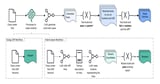
An LLM-based test synthesis layer creates tests aligned with inferred intent, then filters low-value tests and surfaces results in pull requests.
Practical AI-assisted verification enables pre-review triage of high-risk patches, CI gates to run expensive tests only on likely-passing changes, evidence trails for repo Q&A, and targeted fault localization.
The system aims to reduce brittle test suites by auto-adapting to code evolution, with human review triggered only when meaningful issues surface.
Researchers developed a structured prompting technique for LLM code review that requires evidence for conclusions, increasing transparency and verifiability in patch reviews.
Benchmarks show gains in patch verification, fault localization, and Q&A quality, including top-5 accuracy improvements on Defects4J and fewer hallucinations in code Q&A benchmarks.
The workflow uses Dodgy Diff and intent-aware processes to extract developer intent, model risk, and drive a mutation engine that creates dodgy variants to reveal likely failures.
Architectures emphasize catching tests that identify tomorrow’s bugs over hardening today’s tests, signaling a shift to change-specific fault detection in AI-driven development.
The strategic takeaway is that verification becomes a core differentiator, offering a pragmatic middle ground between guesswork and full formal proofs to boost trust and efficiency.
Summary based on 2 sources
Get a daily email with more AI stories
Sources
InfoQ • Apr 17, 2026
Meta Reports 4x Higher Bug Detection with Just-in-Time Testing
Intelligent Living • Apr 17, 2026
Meta's Proof-Style Structured Prompt Turns LLM Code Review into Evidence and Hits 93% Accuracy Without Running Code