China's AI Strategy Surges Ahead: Outpacing U.S. with Integrated National Plan and Domestic Chip Ecosystem
April 15, 2026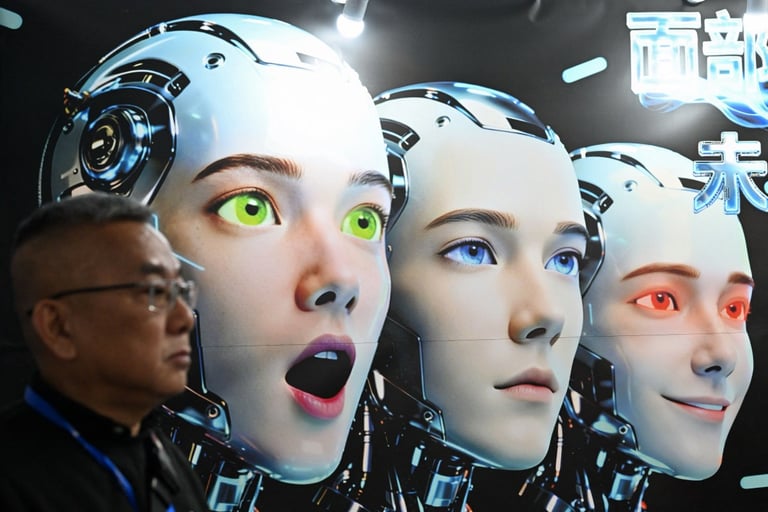

China is pursuing an integrated, policy-driven AI strategy tied to industrial policy, energy planning and military doctrine, aiming to outpace the U.S. if Washington does not adopt more coordinated, forward-looking plans.
This strategy contrasts with the U.S. approach, which remains relatively fragmented and relies on voluntary standards and innovation-led growth rather than a centralized national plan.
Observers will monitor measurable research outputs, such as breakthroughs in computational biology or materials modelling, while questions about the sustainability of domestic chip suppliers influence geopolitics and export controls.
Leading domestic accelerators for the cluster include Huawei’s Ascend series and Cambricon chips, positioned as substitutes for restricted Nvidia A100/H100 lines in China.
China launched the Zhengzhou core node, its most powerful scientific computing infrastructure, designed for high-intensity workloads like climate modelling, materials science, drug discovery, genomics and physics simulations.
Growth drivers likely include accelerated domestic production and staged procurement reserves, testing whether China’s manufacturing base can sustain scale.
Scientific computing workloads differ from consumer AI, with longer timelines and critical needs for interconnects, cooling, and software optimized for local hardware, making progress non-trivial.
China’s robotics and AI ecosystem is the fastest-growing, marked by milestones like leading industrial robot installations and open-source AI strategies such as DeepSeek and Qwen derivatives on platforms like Hugging Face.
The cluster doubled its domestically produced AI accelerator capacity in roughly eight weeks without any American-sourced silicon, signaling a rapid ramp-up of China’s domestic chip ecosystem.
This progress supports China’s broader national plan to build a self-sufficient AI infrastructure stack, aiming to lead in AI-enabled scientific discovery by 2030 in fields like biotechnology, quantum computing, materials science and clean energy.
Demographic pressures, including an aging population and falling birth rates, are driving automation and AI integration across society with plans to deploy AI broadly by 2035.
Experts urge the U.S. to closely monitor China’s advances across universities, industry and government to avoid strategic surprise.
Summary based on 2 sources
Get a daily email with more AI stories
Sources

Newsweek • Apr 15, 2026
China’s Robot Blitz Is Exposing America’s AI Blind Spot
Startup Fortune • Apr 15, 2026
China has doubled its AI scientific computing capacity in two months without a single American chip