India AI Impact Summit Highlights Nation's AI Leadership and Challenges Ahead
February 15, 2026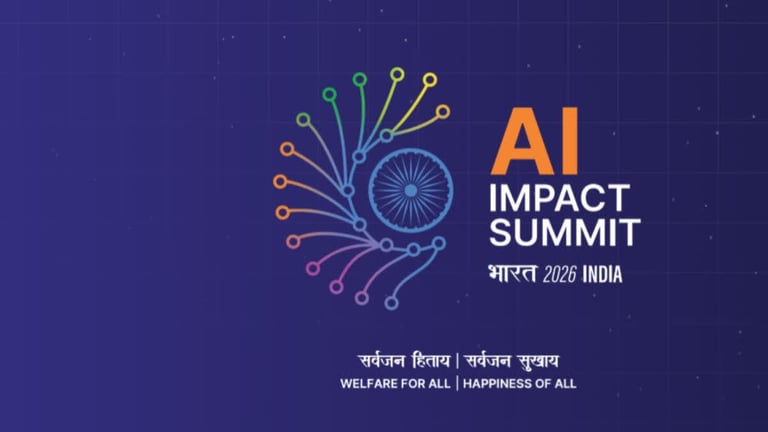

The India AI Impact Summit will convene global tech leaders, policymakers, and business figures to spotlight India's growing role in shaping the future of artificial intelligence.
Under the IndiaAI initiative, the emphasis is on sovereignty, openness, and localization, with twelve indigenous models planned and subsidies to reduce compute costs by as much as 25% through grants or equity support.
Sarvam AI, a Bengaluru startup founded in 2023, claims to outperform leading global labs in Indian-language processing with Bulbul V3 text-to-speech and Sarvam Vision OCR.
Experts caution that generative AI should not be deployed in highly sensitive, precision-reliant tasks due to non-deterministic results.
Tiny AI offers lower latency, better privacy, and broader democratization on resource-constrained devices, but faces memory, compatibility, and performance trade-offs compared with larger models.
Analysts note questions about scalability and competitiveness beyond document recognition and speech, calling for independent benchmarking and third-party adoption to gauge impact.
Regulation should be minimal yet effective, with a focus on cybersecurity research and targeted investments rather than broad controls.
Risks include talent costs, heavy compute and energy needs, data center power use, ethical and regulatory gaps, data privacy and bias concerns, dependence on Western/Chinese LLMs, and challenges scaling AI adoption without displacing workers.
Disclaimers note the content is educational, not financial advice, and AI-generated content may lack guaranteed accuracy.
While AI may cause some job losses, delaying adoption risks hollowing out the sector’s core value proposition, underscoring a need for timely yet prudent AI integration.
Ethical boundaries for AI deployment are emphasized, including limits on surveillance, worker monitoring, algorithmic discrimination, and opaque decision-making.
The leadership stresses a need for scalable AI education to close capability gaps and counter a potential overhang, advocating practical fluency in coding and knowledge work.
Summary based on 97 sources
Get a daily email with more Tech stories
Sources

TechCrunch • Feb 16, 2026
All the important news from the ongoing India AI Impact Summit

Economic Times • Feb 7, 2026
Sarvam AI launches Bulbul V3, wins praise for the Indic text-to-speech model