Fecal Matter: The Unsung Hero of the Cambrian Explosion and Life's Diversification
August 5, 2026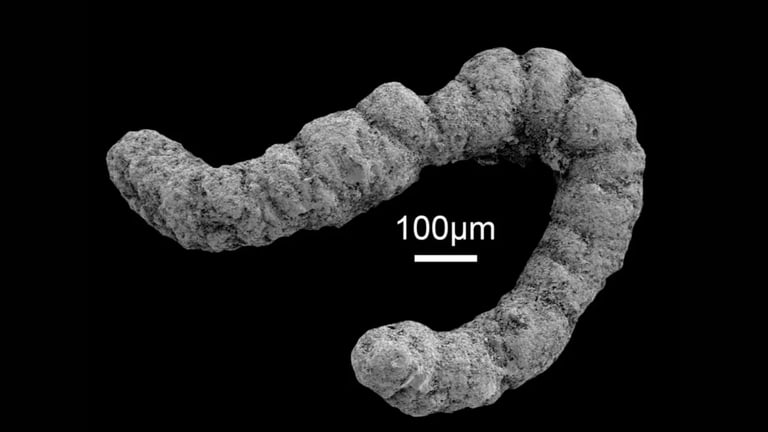

A new theory suggests that fecal matter helped drive the Cambrian Explosion by redistributing organic material and nutrients through the oceans, supporting the emergence of more complex life.
The study, led by evolutionary ecologist Russell Bicknell of Flinders University and involving researchers from Karlsruhe Institute of Technology, appears in Trends in Ecology & Evolution and is set against the backdrop of debates about when complex life first appeared (roughly 539 to 485 million years ago).
The piece notes that the fecal revolution remains relevant for understanding major transitions in life on Earth and cites coprolites and related data as supporting evidence.
Bicknell’s team argues that nutrient-rich feces returned to ecosystems spurred greater food processing and helped diversify life across oceans and beyond.
The article links ancient poop to modern ocean conditions and even contemporary fertilizer, framing a long cycle from feces to ecosystem productivity.
Coprolites from more than 35 global sites were analyzed to track changes in shape, size, and composition as the Ediacaran ended and the Cambrian began, illustrating a shift toward more complex digestive systems.
A recent Trends in Ecology & Evolution paper argues for a foundational role of feces in life diversification, proposing a “fecal revolution” around 540 million years ago alongside rising oxygen levels.
The authors describe a feedback loop where increasing animal diversity produced more feces, which enhanced nutrient availability and further supported population growth and evolution.
This feces-driven cycle suggests evolving feeding strategies produced excreted organic material that created environmental conditions favorable to a wider range of life in oceans and on land.
Fossilized feces dating to the Cambrian onset show patterns of diversity and the emergence of complex digestive systems, supporting a link between waste material and evolutionary progress.
The poop-based theory is presented as complementary to factors like rising oxygen and biogeochemical cycles, not a standalone cause.
Overall, the marine biological pump is viewed as being influenced by fecal matter, contributing to nutrient-rich ocean conditions.
Summary based on 2 sources
Get a daily email with more Science stories
Sources
Gizmodo • Aug 5, 2026
The Weirdest Theory Yet for Why Life on Earth Suddenly Exploded
Popular Science • Aug 5, 2026
Poop made life on Earth possible. Yes, poop.