OpenAI Unveils GPT-Rosalind: AI Breakthrough for Pandemic Preparedness and Biodefense
May 30, 2026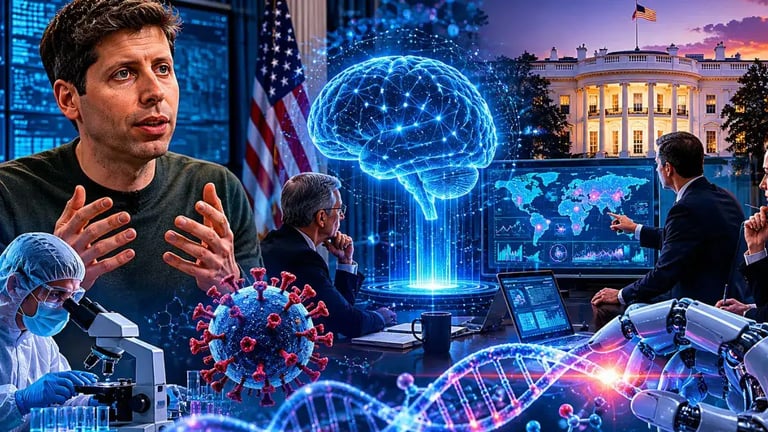

OpenAI unveils Rosalind Biodefense, a program to expand biodefense and pandemic preparedness by granting vetted developers and select public-sector organizations access to GPT-Rosalind, OpenAI’s life sciences AI model.
The initiative sponsors access to GPT-Rosalind and provides support for epidemiological modeling, early detection, screening technologies, preparedness planning, and other public health applications.
OpenAI intends to back biosecurity tool startups, engage external safety stakeholders, and build systems to assess biological risk from its models, signaling a broader push into AI-for-government and national-security relationships.
Initial partners include research institutions, government agencies, and public health organizations, reflecting a focus on improving early warning systems and global health resilience.
The program emphasizes using advanced AI to boost research efficiency—through literature reviews, simulations, data analysis, decision support, and scientific communication—while acknowledging risk management needs.
Access is tightly controlled due to biosecurity concerns, limited to select U.S. government branches and a few international partners.
The rollout signals a potential breakthrough in AI-enabled biodefense, with ongoing effectiveness and safety evaluations by federal partners.
The initiative is framed as a response to ongoing and future pandemic threats, stressing that AI's effectiveness hinges on how researchers, governments, and health institutions leverage the tools and mitigate risks.
The program covers the biological threat lifecycle from prevention to development of medical countermeasures.
Joined participants include Fourth Eon Biosecurity, SecureDNA, and SecureBio Detection, with projects spanning prevention, detection, preparedness, and response within biodefense.
CEO remarks that the goal is to give the world a head start on biodefense by using AI to accelerate research and preparedness against pandemics.
It will aid epidemiological modeling and the design of non-pharmaceutical interventions and safety protocols for health emergencies.
Summary based on 5 sources
Get a daily email with more AI stories
Sources

MLQ.ai • May 30, 2026
MLQ.ai | AI for investors
Times Now • May 30, 2026
Sam Altman's OpenAI Updates White House On New Biodefense AI Model