AI Drones Target Feral Boar: Alberta Leads Innovative Detection Project with Thermal Technology
April 13, 2026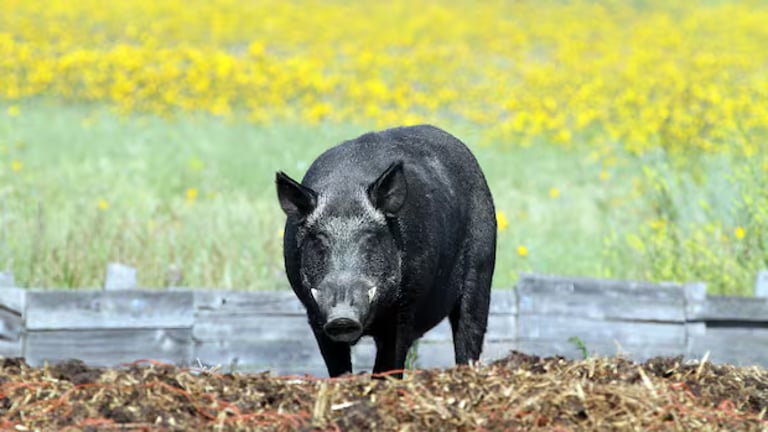

A project in Alberta is using infrared and thermal drones to identify heat signatures at night and train AI to detect feral wild boar, with the goal of building a standardized sighting database and a digital habitat map to predict hotspots.
Researchers from Alberta and the University of Calgary are testing AI-powered thermal drone surveillance as part of the Wild Boar at Large Detection Project, aiming to differentiate wild boar from other species.
The effort seeks to teach AI to distinguish wild boar from other animals, develop a consistent sighting database, and create a digital habitat map to anticipate where herds are likely to occur.
Experts acknowledge that true eradication is unlikely in the near term and would require a national, science-based strategy, with Alberta positioned as the leader in this initiative.
Officials see potential future uses for the surveillance system in disease outbreak responses, GPS tracking of sounders, and improved estimation of total wild boar populations, while noting that eradication will demand long-term national coordination and more research.
Wild boar pose a significant agricultural and ecological threat, including hybridization with domestic pigs, and Alberta’s current approach focuses on monitoring, trapping, farm regulations, and restricting wild boar sport hunting.
Future work emphasizes training models to differentiate wild boar from other species, expanding training data to include more species, and improving detection across diverse landscapes.
A habitat suitability map was developed by integrating public sightings with environmental data to predict where wild boar are likely to live in Alberta, highlighting potential hotspots near Edmonton and Grande Prairie.
Researchers refined the habitat suitability map by layering public sightings with environmental factors to forecast hotspots around Edmonton and Grande Prairie, with ongoing improvements planned.
Field tests in spring 2024 spanned over 3,000 kilometres across two Alberta farms, using a GPS-collared sow as a movement guide and incorporating external datasets from Manitoba and the U.S. Department of Agriculture to train AI models.
Two Alberta field sites—near Peace River and closer to Edmonton—conducted extensive testing in spring 2024, aided by a GPS-collared sow nicknamed the 'spy pig' and external thermal imagery from Manitoba and USDA.
Early AI models reached detection accuracy above 75%, but struggled with missing piglets, grouping multiple boars as one, and confusion with non-heat sources or other wildlife.
Summary based on 2 sources