Apple's New Patent Could Revolutionize Data Handling in iWork and FileMaker
February 11, 2026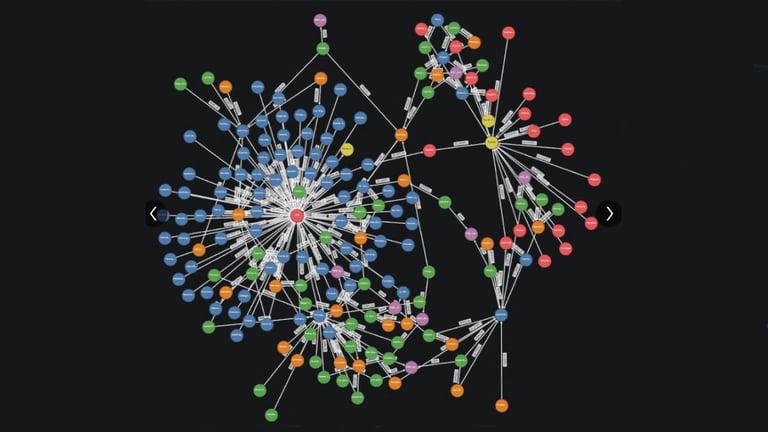

Apple has filed a patent for a flexible database that could overhaul how structured data is handled across its software, notably Claris FileMaker and potentially iWork tools like Numbers, Pages, and Keynote.
The patent’s broad language could extend to iWork, potentially enabling Numbers to function as a hybrid spreadsheet-database with relational querying and dynamic data manipulation.
There is limited public information on how Apple plans to deploy Kuzu’s technology, and the Kuzu product site is offline with its GitHub repository archived as of 2025, indicating a transition phase after the acquisition.
Apple’s acquisition timing aligns with other moves and EU reporting on significant acquisitions, suggesting a long-term strategy to bolster platform services and developer tooling.
Kuzu specialized in embedded graph databases designed for fast queries and ease of use, contrasting with relational databases used in FileMaker Pro that organize data in connected tables rather than a graph network.
Kuzu is an embedded graph database released under an MIT license on GitHub, focused on speed, scalability, and ease of use.
Graph databases, like Kuzu, emphasize relationships between data, unlike traditional relational databases used by FileMaker.
Industry reaction hints at cautious optimism from FileMaker communities and interest in how low-code/no-code trends could intersect with Apple’s approach, potentially competing with tools like Microsoft Lists or Airtable.
Performance improvements are highlighted, including adaptive indexing and caching to maintain fast queries in non-fixed schema environments.
The strategic rationale behind Apple’s purchase remains speculative, with possibilities including integration into FileMaker Pro, enhancement of iWork (potentially Freeform), or support for broader ecosystem features.
Contextual caveat: many patents do not result in shipped products, so this may represent a long-term direction rather than an immediate product launch.
Technical architecture includes a storage layer for variable-length records, adaptive indexing, and a query engine capable of interpreting natural-language or semi-structured queries.
Summary based on 3 sources
Get a daily email with more Tech stories
Sources

AppleInsider • Feb 11, 2026
Faster, more flexible databases could be coming to FileMaker or iWork

Apple World Today • Feb 11, 2026
Apple acquires Kuzu, a company that specializes in graph databases